
1240 Results
PBL Spotlights
We asked National Faculty how PBL can enhance teaching and learning in a variety of disciplines. Here's what they had to say.
PBL Spotlights
We asked National Faculty how PBL can enhance teaching and learning in a variety of disciplines. Here's what they had to say.

Blog
Improving your project all along its path
Strategy Guides
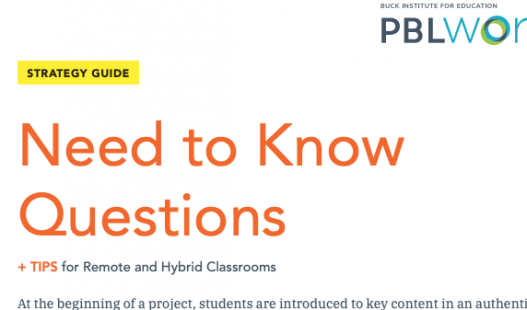
At the beginning of the project, students are introduced to key content in an authentic context via a stimulus or hook, which in PBL we call an entry event.
Strategy Guides
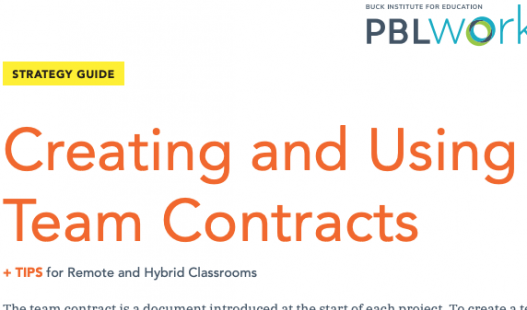
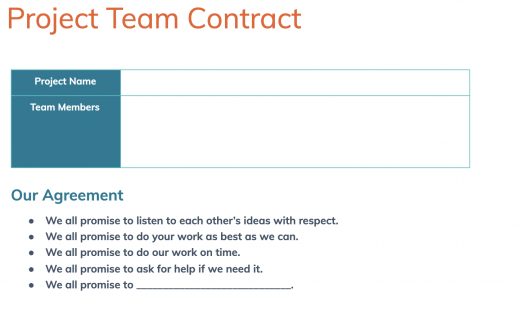
The team contract is a document introduced at the start of each project that asks project teams to think through and agree on how students will individually contribute to the team, how the members will work together, and how problems will be solved when they arise.
Strategy Guides
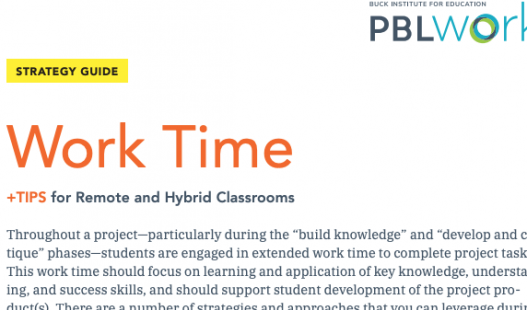
Throughout a project—particularly during the build knowledge and develop and critique phases—students are engaged in extended work time to complete project tasks.
Strategy Guides
In designing projects, we strive to have students doing the work of the world. Inviting those who actually do that work in the world into your project can be extremely powerful.
Strategy Guides
Helping all students (including English Language Learners) become fluent in the language of a project’s targeted content is an essential part of teaching in a PBL classroom.
Strategy Guides
In Project Based Learning, students should have regular opportunities to reflect, individually and with others, on both what and how they are learning. This guide provides a framework and strategies for supporting reflection on learning throughout a project.
Strategy Guides
Exit tickets are brief formative assessments and/or reflection routines that students complete and submit at the end of a lesson or class period. This guide includes strategies for using exit tickets to support assessment and reflection within the context of PBL.
Strategy Guides
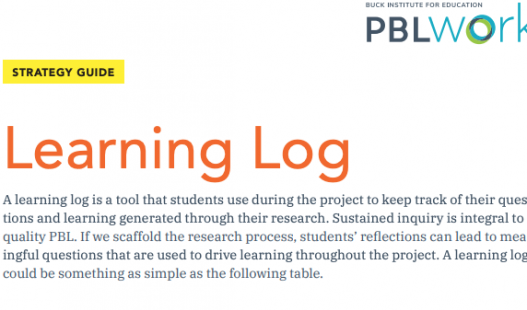
A learning log is a tool that students use during the project to keep track of their questions and learning generated through their research. This guide offers strategies for teaching students to use learning logs to support inquiry throughout a project.
Strategy Guides
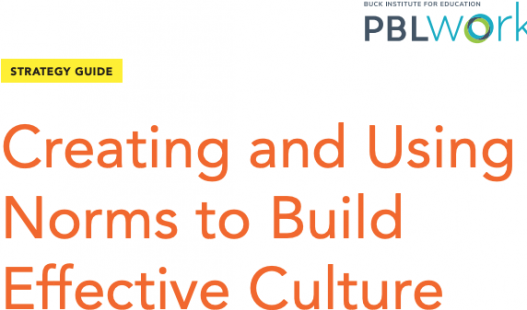
Norms are the agreed upon rules that build a productive, self-driven, and respectful culture. These norms, especially when co-created with students, can serve as the “north star” or guiding philosophy for all that happens in a classroom.
Student Handouts
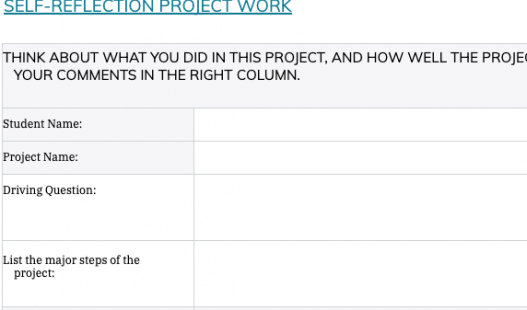
This document helps students think about what they did in the project and how well the project went.
Student Handouts
This contract can be used by a project team to agree upon how they will work together.
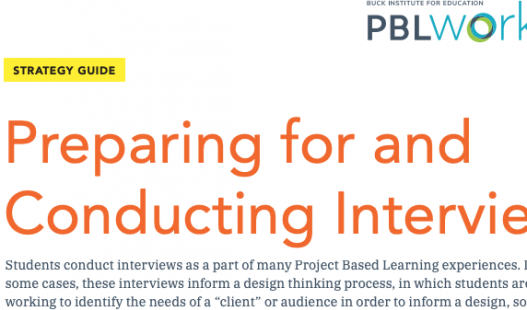
Strategy Guides
Students conduct interviews as a part of many Project Based Learning experiences. In some cases, these interviews inform a design thinking process, in which students are working to identify the needs of a “client” or audience in order to inform a design, solution, or communication strategy.
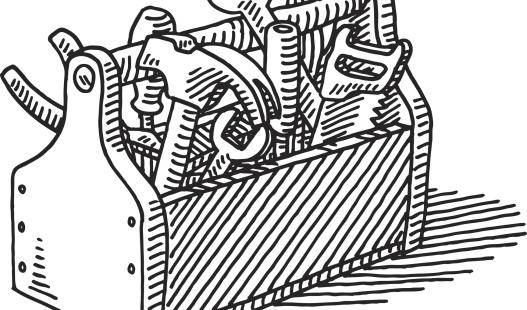
Product Toolkit
A physical model or prototype is a tangible representation of an idea, object, or system. Models are used to visualize concepts, simulate processes, or communicate design ideas while prototypes serve as functional examples for testing and iteration
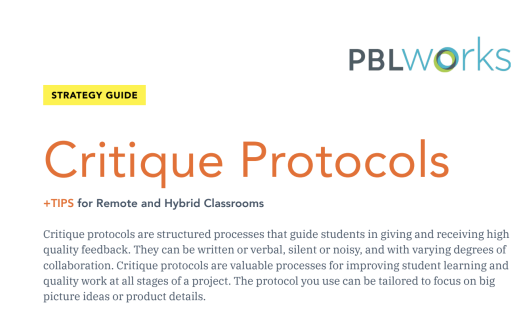
Strategy Guides
Critique protocols are structured processes that guide students in giving and receiving high quality feedback. This guide offers strategies for implementing peer critique protocols that enhance learning and improve the quality of student work.
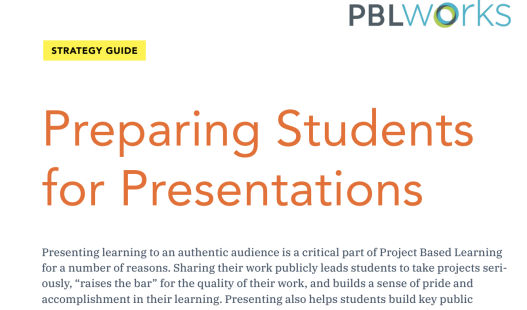
Strategy Guides
Effective preparation for presentations helps students build project management, collaboration, and communication skills and ensures that their presentations are high-quality and impactful.

Product Toolkit
A public service announcement (PSA) is a short, impactful message created to raise awareness or influence attitudes and behavior about a specific issue. PSAs often use visual and auditory storytelling to engage the audience and deliver a clear, memorable message.