
38 Results

(Book)
A 7-Steps guide for school and district leaders implementing the 4 Cs by Ken Kay & Valerie Greenhill.
Link to Amazon
Strategy Guides
As students work together on projects, they learn valuable skills for collaborating, managing group dynamics and conflict, and building on one another’s strengths.
Strategy Guides
Whether your students exhibit their work products during the course of the project, at the end, or both, you’ll want to have many sets of eyes on their public products. An audience feedback form is a tool used to actively engage the audience at an exhibition.
Strategy Guides
A rubric is more than a tool to assess final products. It is a tool that should be leveraged throughout the project to support multiple kinds of learning opportunities for your students. This guide offers strategies for using rubrics to aid learning at each phase of a project.
Strategy Guides
Effective teams require us to think carefully about the kind of work students will be doing throughout the project. What outcomes are most important? How can we utilize teams so students effectively reach those outcomes?
Strategy Guides
The need to know questions that initiated inquiry at the beginning of the project are central to students’ learning as they follow the project path. Need to know questions are revisited throughout the project in order to track learning and support sustained inquiry.
Student Handouts
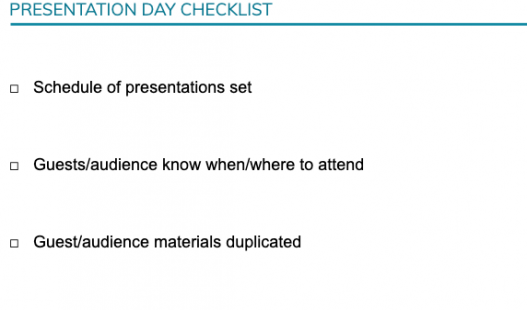
This checklist helps teachers prepare for project presentations before they start.
Student Handouts
May be filled in by project team members to record agreements about how they will work together.
Student Handouts
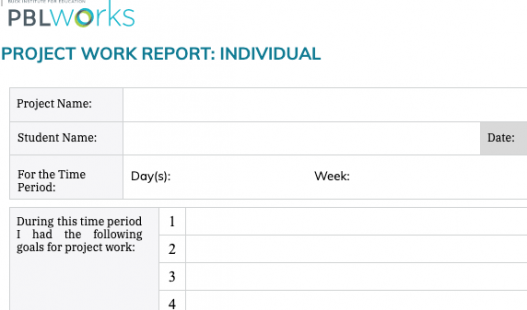
This form may be used by students to track progress on a project and have them report on what they individually accomplished on a particular day or week.
Student Handouts
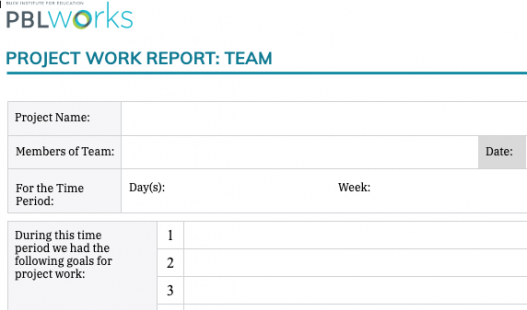
This form may be used during a project to have students report on what their team accomplished on a particular day or week.
Student Handouts, (Document)
For students preparing for a Project-Based World
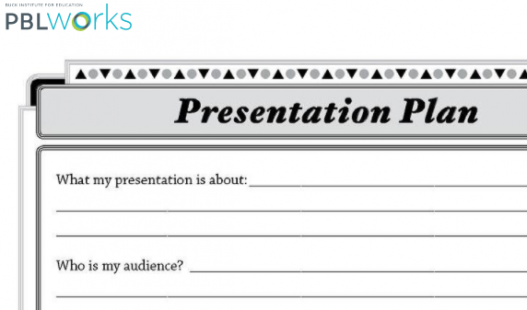
Student Handouts
This document helps students organize their presentations with a specific audience in mind.
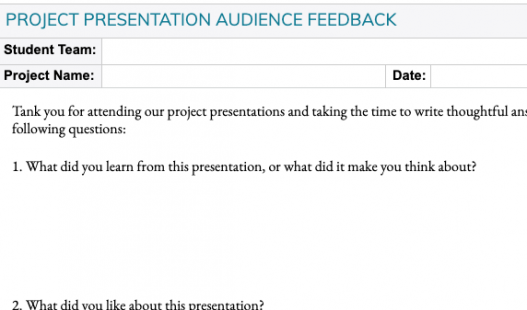
Student Handouts
This documents helps capture thoughtful feedback from the audience for student presentations.
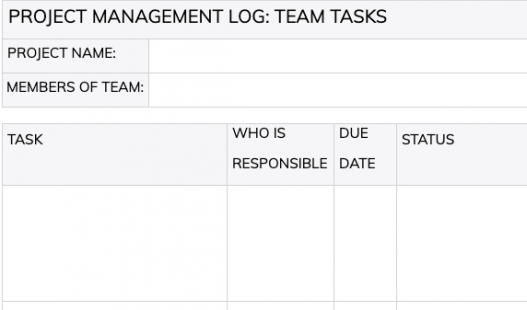
Student Handouts
This document helps a team keep track of project tasks, who is responsible for them, and by when.
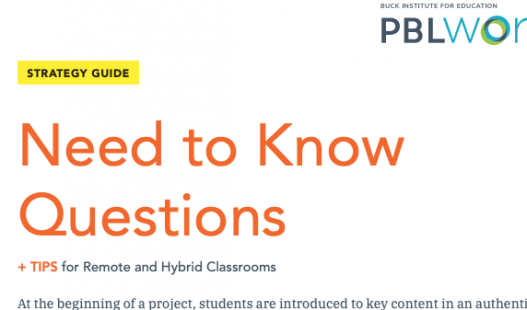
Strategy Guides
At the beginning of the project, students are introduced to key content in an authentic context via a stimulus or hook, which in PBL we call an entry event.
Strategy Guides
The team contract is a document introduced at the start of each project that asks project teams to think through and agree on how students will individually contribute to the team, how the members will work together, and how problems will be solved when they arise.
Strategy Guides
Throughout a project—particularly during the build knowledge and develop and critique phases—students are engaged in extended work time to complete project tasks.
Strategy Guides
In designing projects, we strive to have students doing the work of the world. Inviting those who actually do that work in the world into your project can be extremely powerful.
Strategy Guides
Helping all students (including English Language Learners) become fluent in the language of a project’s targeted content is an essential part of teaching in a PBL classroom.
Strategy Guides
In Project Based Learning, students should have regular opportunities to reflect, individually and with others, on both what and how they are learning. This guide provides a framework and strategies for supporting reflection on learning throughout a project.